Opinion piece — my own view, not confirmed by Apple or anyone else.
I first said this to my dad about ten years ago. I’ve said it to friends since, and most thought I was being optimistic. Then WWDC 2025 happened. Apple gave every one of its operating systems the same version number for the first time ever, and I thought: okay, this is starting.
My prediction: Apple will eventually consolidate all of its operating systems into one. iOS, iPadOS, macOS, watchOS, tvOS, visionOS, all of it, under a single platform called OS (AppleOS). I think it happens by 2030, and I think when it does, Apple turns it into one of the biggest moments in the company’s history.
So, how did I get to this:
The lineup is getting complicated
Right now Apple ships six separate operating systems across its devices: iOS, iPadOS, macOS, watchOS, tvOS and visionOS. And soon, some version of iOS will run on the iPhone Fold, which will reportedly behave like an iPad when you open it up.
That’s a big tell. When a single device effectively switches operating systems depending on how you hold it, the boundary between those systems starts to look artificial.
The convergence is already happening
Actually, I would argue it already started at WWDC 2025. That was the moment Apple did something it had never done before: it gave every single operating system the same version number. iOS 26. iPadOS 26. macOS 26. watchOS 26. tvOS 26. visionOS 26. All of them, simultaneously, the same number.
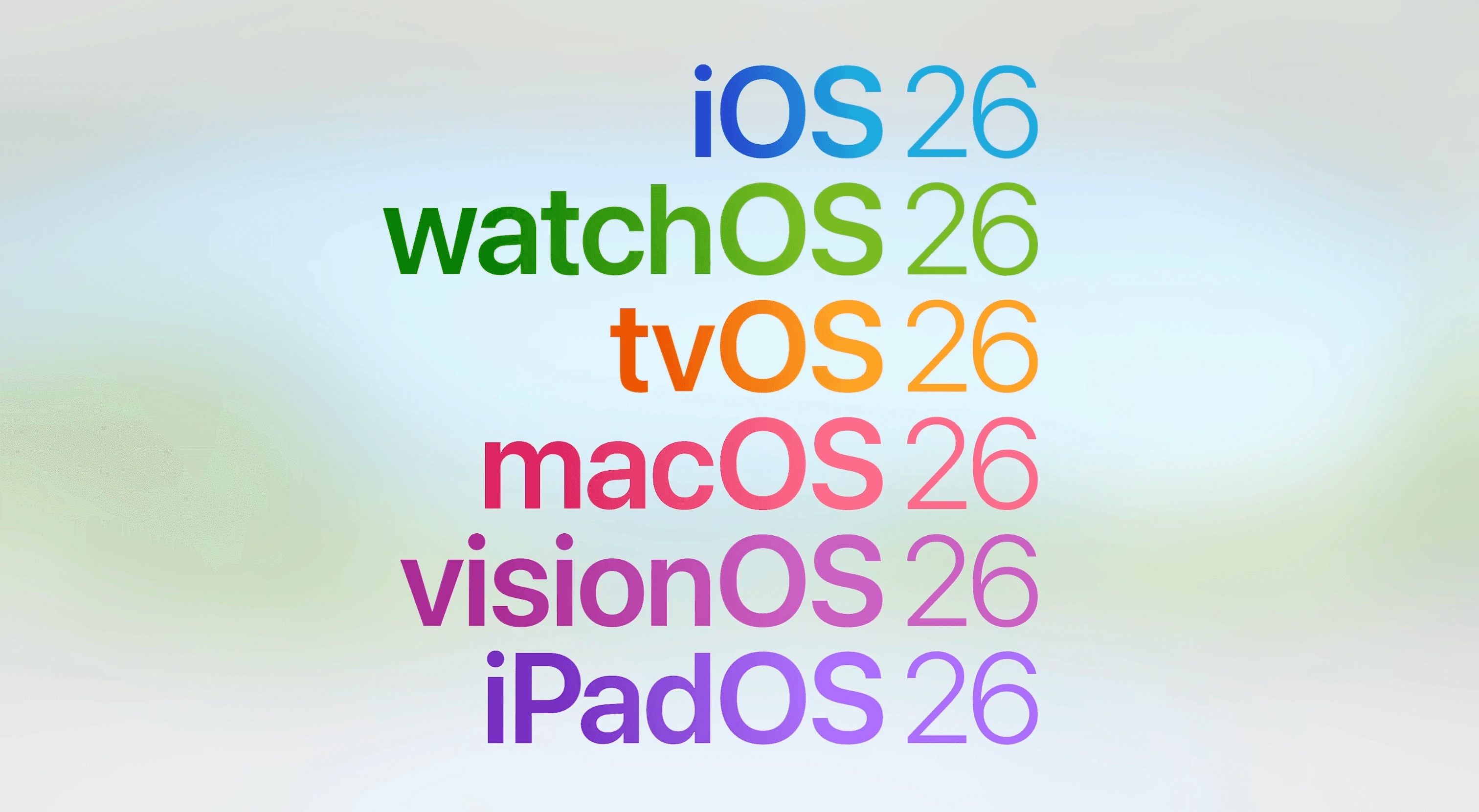
Craig Federighi introduced it with his usual dry humour, joking about the “crack product marketing team”. But underneath that joke was something meaningful. For the first time ever, if you asked someone which version of Apple’s software they were running, the answer would be the same regardless of the device.
That’s not a coincidence. That’s a statement of intent.
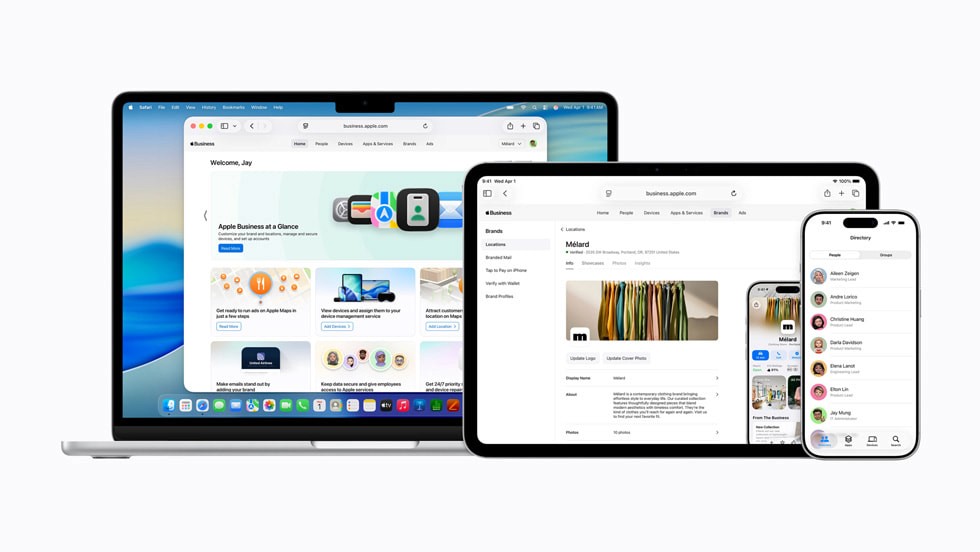
It was also paired with Liquid Glass, a unified design language that, for the first time, feels genuinely consistent across iPhone, Mac, Watch and Vision Pro (for all 10 of you). The interfaces are still different, but the visual DNA is now shared. Apple showed them side by side on stage as if to say: this is one thing.
Rumours pointing in the same direction
Then there’s what’s reportedly coming next.
A touchscreen MacBook “Ultra”, the first Mac ever to support touch, alongside macOS updates for pinch gestures and touch-friendly controls. The Dynamic Island, which started on iPhone, is said to be coming to the Mac. An iPhone Fold that opens into a 7.8-inch display and shifts into a more iPad-like multitasking interface automatically.
If even half of that is accurate, the line between operating systems becomes harder and harder to define.
There are also rumours of smart glasses, an AI pin, and AirPods with cameras. None confirmed. But if any of them arrive, they don’t fit neatly into existing OS categories.
So what do they run? A new OS? A stripped-back version of something existing? Or something more fundamental that scales to the hardware?
That last option makes the most engineering sense. One core operating system, with an interface that adapts to the device. Same foundation, different presentation.
Why it makes sense for customers too
One of the most common things I hear from people is confusion about which Apple product does what, and why something works differently on their Mac than on their iPhone. App layouts differ. Settings are in different places. Features arrive on one platform before another.
A unified Apple OS would not necessarily make all of that disappear overnight, but it would mean Apple is building and maintaining one system rather than six. Updates could arrive everywhere simultaneously. Features would behave consistently. A customer buying their first Apple product would not need to relearn how things work when they pick up a second one.
That kind of consistency is something Apple has always valued. It is part of why people stay in the ecosystem.
I think it will be called OS
So, the groundwork is already being laid. The unified version numbering at WWDC 2025 was step one. Every platform running "26" at the same time was Apple quietly removing one of the last visible differences between its operating systems. With that, came Liquid Glass, a shared design language across every platform simultaneously.
But I do not think this ends quietly. Apple has a habit of building towards moments, and I think AppleOS is one of them.
Consider the 2030 target. Apple has publicly committed to being carbon neutral across its entire footprint by 2030. iCloud and iMessage already run on renewable energy. The environmental agenda is real and it is on a countdown. What better way to cap that decade of work than with a landmark product announcement, a singular operating system that unifies every device Apple sells, framed as a new era for the company?
Walk into any Apple Store and pick up a device. Any device. It runs AppleOS. The experience scales to the hardware. On a Watch, it is compact and focused. On an iPhone, familiar and fluid. On an iPad, more expansive. On a Mac, fully powerful. On a Vision Pro, spatial and immersive. Same operating system, different constraints, different scales. And the sales pitch becomes the simplest it has ever been: just pick the hardware you want. The rest you already know.
I think Apple would make a big song and dance of that. I think they would deserve to.
To be clear…
A single operating system does not mean every Apple device becomes the same device. That is not what I am suggesting at all.
An iPad running AppleOS and a Mac running AppleOS would still be very different experiences. The hardware determines what you can do, and always will. A Mac will still have capabilities an iPad does not. A Watch will still be constrained by its screen size. The underlying OS being shared does not change any of that. Apple will still apply the same limits it always has, based on what each piece of hardware is actually capable of.
What changes is the customer experience at the point of sale. Right now you can walk into an Apple Store with £599 and leave with an iPhone 17e, an iPad Air, or a MacBook Neo. Three completely different product categories, three different operating systems, three different ways of doing things. That is a real barrier for a lot of people, especially those new to Apple.
Imagine instead that the answer to "which should I buy?" becomes simply: pick the hardware that suits how you want to use it. The operating system is AppleOS on all of them. You already know how it works. You just get a different experience depending on the screen size, the form factor, and what the device is designed to do.
That is a much easier story to tell. And it is essentially already true, just without the name to match.
I could be wrong about the timeline. Apple has resisted formal platform consolidation for years and there are real engineering and developer reasons for keeping things separate. But the direction of travel is clear. A single, adaptive operating system that knows exactly how to present itself on whatever hardware it is running on.
AppleOS might not exist yet, at least not by name.
But when it arrives, it won’t feel new. It will feel inevitable.